
Talktools Chew Necklace: The Sensory Chewelry Guide for Kids Who Need to Chew
If you’re searching for a Talktools Chew Necklace because your child keeps chewing sleeves, pencils, hoodie strings, or fingers, you’re not alone. A chew necklace (sometimes called chewelry, chewlery, or a sensory necklace) can be a simple, school-friendly way to meet oral sensory needs while protecting clothing and supporting self-regulation. In this guide, you’ll learn how sensory chew necklaces work, who they’re for (autism, ADHD, anxiety, and more), how to choose a “chewy necklace sensory” option that actually gets used, and how to teach safe rules that work at home and in the classroom.
Quick note: This article is for education and everyday parenting/teaching support—not medical advice. If you’re working with an OT or SLP, ask them which sensory chew necklaces or oral sensory tools are best for your child.
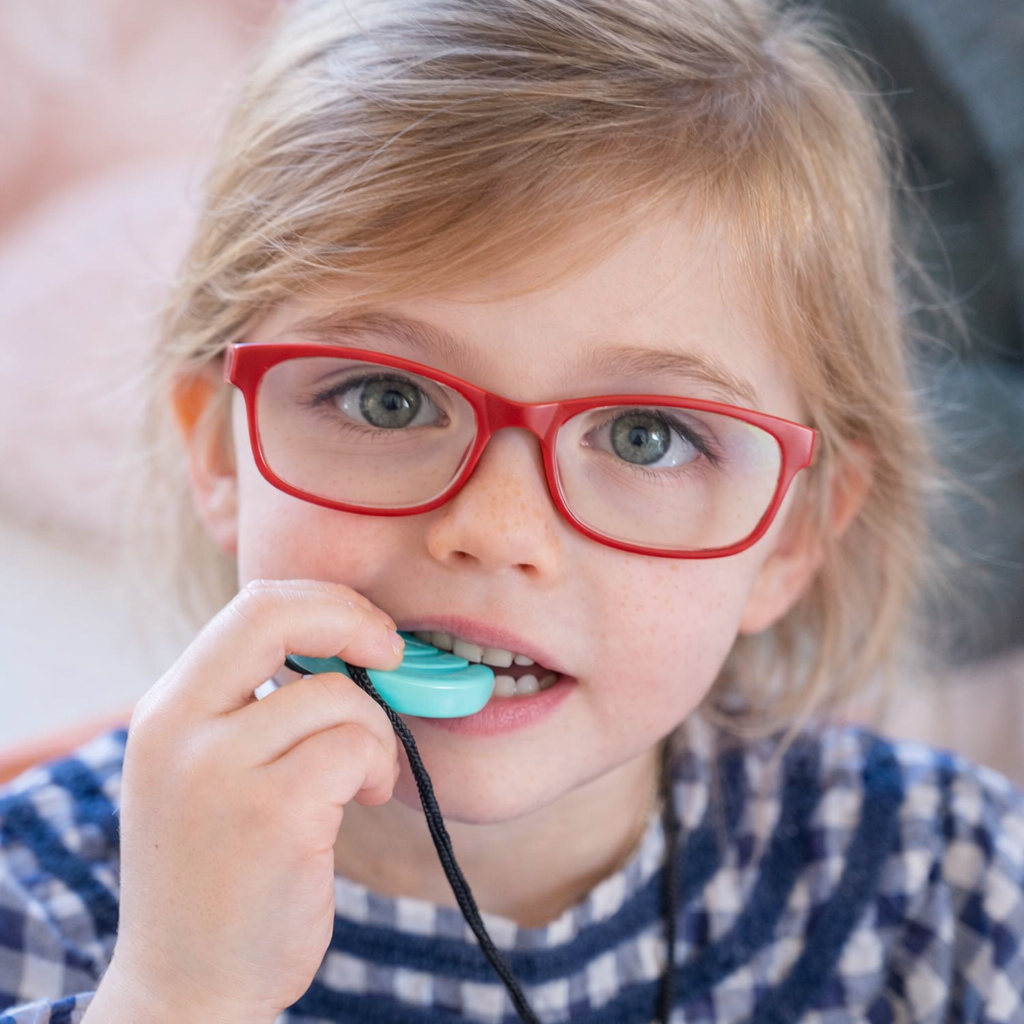
Signs your child might need chewies for kids sensory (and what it can replace)
Before buying any chewelry for kids, it helps to confirm the “problem” you’re trying to solve. Chewing can be developmentally normal sometimes, but constant chewing that damages clothing or becomes unsafe is a strong signal that a safer oral option is needed.
Here are common signs families notice right before they search for chew necklaces for sensory kids:
- Your child chews shirt collars, hoodie strings, or sleeves until they’re wet or torn (a big “laundry problem”).
- Pencils, erasers, markers, or toys become chew toys for kids even when they aren’t meant to be.
- They mouth non-food items (paper, LEGO, hair, nails) when concentrating or anxious.
- You see chewing increase during transitions, noisy environments, or stressful moments—when a sensory chew tool could act like an anxiety necklace for calm.
- Teachers report constant pencil chewing during writing time, and you’re looking for adhd tools for kids that don’t disrupt class.
The goal isn’t to stop chewing by force—it’s to swap unsafe chewing for a safer chewy alternative, like a sensory chew necklace or other sensory chew toys.
What is a TalkTools chew necklace and why do kids chew in the first place?
A TalkTools chew necklace is a wearable oral sensory tool designed for safe biting and chewing. TalkTools describes their chew necklaces (and pencil toppers) as a way to provide oral sensory input on the go—at home, school, or therapy—and as an alternative to habits like biting, thumb sucking, or pacifier use.
Oral sensory seeking: the “why” behind the chew necklace
Many kids chew because chewing is organizing for the nervous system, and a sensory chew necklace can deliver that same input in a safer, more predictable way. For some children, chewing helps them stay calm, manage big feelings, or handle environments that feel overwhelming—like noisy classrooms or busy stores. Occupational therapists often talk about identifying the reason for chewing before choosing a tool, because what works for one child may not work for another.
Chewing, focus, and the jaw
TalkTools notes that chewing (including with a chew necklace) can provide input around the jaw/TMJ area and may help some kids maintain attention during learning or play. That doesn’t mean a chewy necklace replaces supports like movement breaks or OT—but it can be one helpful piece in a bigger sensory plan.
Who benefits most from a chew necklace for kids?
Not every child needs chewies, but for many families they become one of those “autistic kids must haves” or “why didn’t we try this sooner?” tools—especially when chewing is frequent or intense.
1) Autistic kids and oral sensory toys for kids with autism
Many autistic children seek oral input for regulation, comfort, or sensory exploration. In these situations, autism chew toys (including a chew necklace for kids) can offer a safer replacement for chewing shirts, nails, or classroom objects. Think of oral sensory toys for kids with autism as an accommodation: it helps the child meet a body need without getting in trouble.
2) ADHD tools for kids (focus + fidget)
A chew necklace can also fit into the category of adhd tools for kids or toys for kids with adhd, especially for kids who fidget nonstop, mouth objects, or need constant movement. Some children do better with a fidget necklace or hand fidget, while others strongly prefer a sensory chew option. A wearable tool can reduce pencil-chewing and help with seated work time—similar to how some families use other adhd toys for kids like fidgets, wobble cushions, or textured pencil grips.
3) Anxiety and stress: when an anxiety necklace helps
For some kids, chewing is a stress response—similar to nail biting. A sensory necklace can work like an “anxiety necklace” because it offers a predictable, calming action they can control. (It’s not a cure for anxiety, but it can be one coping tool alongside breathing, movement, and supportive routines.)
4) Toddlers, teething, and “teething necklace” searches
Parents often discover sensory chew necklaces by searching “teething necklace,” “teething necklace for baby,” or even “teething necklace for mom.” Here’s the key distinction: most experts warn against babies wearing necklaces due to choking/strangulation hazards. If you’re considering any wearable item around a young child’s neck, prioritize safety and supervision and follow pediatric guidance on choking prevention.
For toddlers who chew, consider toddler chew toys designed for their age and chewing strength, and use any necklace-style chewelry only with adult supervision and age-appropriate features (like breakaway clasps).
TalkTools Chew Necklace features that matter (and what to look for)
When you compare chew necklaces for sensory kids, focus on safety, durability, and ease of use—not just cute shapes.
Materials and compliance
TalkTools lists key safety-related features such as being FDA compliant and latex, lead, BPA, and phthalates free. If you’re shopping other brands of chewelry, look for transparent material and testing information.
Oral motor awareness and “sensory chew” input
TalkTools also notes their chews provide proprioceptive input that can support oral motor awareness, and they’re intended to satisfy the need for jaw stimulation and reduce unwanted oral habits—exactly the kind of goal families have when choosing a sensory chew necklace. In practical terms, that means the tool is meant to be chewed (not just worn) and used as an alternative to chewing unsafe items.
Adjustable fit for comfort (important for chewing necklace for kids sensory use)
An overlooked feature of a chewing necklace for kids sensory is fit. If the pendant sits too high, it can be frustrating and lead to tugging. If it sits too low, it may invite rough pulling or be less usable. TalkTools provides instructions for adjusting/shortening the necklace for comfort.
Made in the USA and everyday practicality
TalkTools lists “Made in USA” as a feature/benefit for their chewelry. For many families building a list of autistic kids must haves, practical details like consistent quality, easy cleaning, and predictable sizing matter as much as the “cute factor.”
How to choose the best chewy necklace sensory option for your child
Choosing the right chew necklace for kids is less about the “best brand” and more about matching the tool to the child’s chewing pattern.
Step 1: Notice what they chew (and how hard)
Ask yourself (before choosing a chew necklace):
- Do they gently chew (light chewer), or do they bite through toys quickly (heavy chewer)?
- Do they chew when concentrating (ADHD), when stressed (anxiety), or constantly (sensory seeking)?
- Do they chew clothing, hair, pencils, or even hands?
Light chewers may do well with many sensory chew necklaces. Heavy chewers often need thicker, more durable autism chew toys or alternatives like chew sticks for humans (chew tubes/sticks made for oral input), which can handle stronger biting.
Step 2: Pick a texture and shape they’ll actually use
Some kids love ribbed textures; others prefer smooth chewy surfaces on a chewy necklace sensory tool. If your child rejects one chewy necklace, try a different texture before giving up. A tool only works if it becomes the preferred option over sleeves or fingers.
Step 3: Consider social comfort at school
For school, discreet options matter. Many older kids prefer a simple pendant that looks like a regular sensory necklace rather than “baby-ish” chew toys for kids. The goal is a tool they’ll use confidently, not hide in a backpack.
Step 4: Plan for backups (because chewies disappear)
If you’ve ever had a school sweater vanish, you know tools vanish too. Many families buy two chewies: one for home and one for school, or one as a backup in case a chew necklace is forgotten, washed, or misplaced.
How oral sensory tools fit into a sensory diet (beyond just chew necklaces)
A sensory chew necklace can be powerful, but it works best as part of a bigger routine—especially for kids who chew from stress or overload.
Occupational therapists often describe building a “sensory diet,” which means providing the nervous system with regular, planned sensory input (including sensory chew time with a sensory chew necklace) so the child is less likely to become dysregulated and then reach for coping behaviors (like constant chewing).
Sensory diet ideas that pair well with chewelry
Depending on your child’s age and needs, you can pair chewelry with:
- Crunchy or chewy foods at snack time (when appropriate)
- Straw drinking (smoothies or water) for oral input
- “Heavy work” like carrying books, wall push-ups, or animal walks
- Short movement breaks before seated work
- Breathing exercises for anxiety (a non-chew version of regulation)
OTFC Group notes that chewing can help kids cope and manage arousal levels, even if it doesn’t remove the underlying trigger—so combining sensory chew necklaces with broader supports can make the effect more consistent.
When chewing gum is (and isn’t) a good idea
Some families ask about gum as an alternative sensory chew strategy. Some therapists do use gum for older children with strict rules, but gum is also a choking risk and can be misused (stuck under desks, swallowed). If you try gum, follow school policy and age-appropriate safety guidance, and consider sensory chew necklaces as a more controlled option for many kids.
Chewelry safety rules: how to use a chew necklace safely at home and school
Because chewing involves the mouth (and often younger kids), safety deserves a full section for any chew necklace—especially for families who originally searched for a teething necklace.
The most important safety principles
Follow these basics with any chewelry for kids:
- Supervision matters, especially for young children and for heavy chewers. Pediatric sources emphasize that children under 5 are at higher risk of choking on small objects.
- Check for wear and tear. TalkTools recommends periodically checking product integrity and replacing if cracking or deterioration appears.
- No chewing while sleeping (or unsupervised in bed). Sleeping with a chew necklace increases risk.
- Teach “chew only” rules: no swinging, sharing, or stretching the cord.
Use pediatric choking-prevention guidance as your baseline
If your child is young, has a history of mouthing objects, or uses multiple oral tools like a chew necklace for kids, it’s worth reviewing pediatric safety guidance on choking prevention:
This helps you think through age, supervision, and household risks beyond just the chew necklace for kids.
Cleaning and hygiene (especially in classrooms)
Chewing tools go in mouths, so cleaning is non-negotiable. TalkTools recommends washing before and after use with warm soapy water, and notes dishwasher-safe (top rack) care. For an autism classroom must haves list, hygiene supplies (a labeled container, wipes, and a backup chew) belong right next to the sensory chew toys.
A note for therapy plans
TalkTools explicitly suggests talking with your therapist as a primary guide when choosing independent chewing options like chewelry for kids. If your child has feeding therapy, oral motor goals, braces, jaw pain, or strong oral seeking, check in with their OT/SLP.
How to introduce a chew necklace without making it a battle
A chew necklace works best when it’s framed as a tool, not a punishment or a bribe.
Use a simple script
Try:
- “Your body likes to chew. This is your safe chewing necklace for kids sensory use at school.”
- “Sleeves are not for chewing. Your chewies are for chewing.”
This keeps expectations clear while respecting the sensory need for a chew necklace.
Make a “chew plan” (home + school)
A good chew plan includes:
- Where the chew necklace for kids lives (hook, pouch, pencil case)
- When it’s okay to use (car, homework, circle time)
- How to ask for it (a visual card, a quiet signal)
- What to do if it’s missing (backup sensory chew option)
Occupational therapists often recommend pairing chew tools (like sensory chew necklaces) with broader sensory strategies (“sensory diet” supports like movement, breathing, or heavy work) so the child isn’t relying on one tool alone.
Set boundaries without shame
If you’re replacing shirt chewing, avoid “Stop chewing!” comments that can create embarrassment. Instead: “Chew necklace or hands in lap.” A neutral tone supports self-regulation and keeps the sensory chew necklace from becoming a power struggle.
Real-life routines: where a sensory chew necklace helps most
A chew necklace is often most useful in predictable “high-chew” moments—when your child’s body is telling you they need extra input.
Homework and screen time
During homework, many kids chew to focus. A fidget necklace might not provide enough input for oral seekers, so a chewy necklace sensory tool can be more effective. Pair it with a timer and short movement breaks to support attention.
Car rides and errands
Car rides can trigger chewing because kids are stuck sitting and managing stimulation. A sensory necklace can reduce chewing on seatbelts, sleeves, or fingers. Keep a backup chew toy for kids in the car so you’re not stuck without a tool.
Before school and after school transitions
Transitions are hard for many children (autism and ADHD especially). Putting the chew necklace for kids on before school can act like a “ready” ritual, and using it after school can help them downshift from the demands of the day—similar to other adhd tools for kids that help with regulation.
Classroom strategies: autism classroom must haves and teacher-friendly routines
In many classrooms, a chew necklace becomes part of “autism classroom must haves” because it can prevent constant redirection (“Stop chewing!”) and reduce damaged supplies.
How teachers can manage chew necklaces for sensory kids
A teacher-friendly approach:
- Add the chew necklace to the child’s accommodation plan (if applicable).
- Teach classroom rules: “Chew stays in mouth; don’t share; keep it at your desk.”
- Provide a discreet storage spot (small box, labeled bag).
- Use a backup: pencil topper or another sensory chew toy for transitions.
This is especially helpful for kids who chew pencils during writing—one reason chew toys for kids can be legitimate learning supports, not distractions.
Preventing “novelty attention” from peers
If peers ask questions, give the child a simple script: “It helps me focus.” Many older kids prefer a discreet chewelry pendant so it looks like a regular necklace and reduces attention.
Internal link suggestion (for your site)
If you have a sensory resource hub, link this paragraph to your related post about sensory chew routines:
➡️ sensory diet ideas for school and home
Choosing chewelry for different ages: toddlers, school-age kids, teens, and adults
The best chew necklace for kids depends on age, supervision, and social context. What works in preschool may not work in middle school.
Toddlers and preschoolers (toddler chew toys first)
For toddlers, toddler chew toys that are handheld and easy to supervise are often a better starting point than a chew necklace. If you found this page by searching “teething necklace for baby,” focus on teethers and baby-safe options first, and avoid leaving any necklace-style item on a young child.
Elementary school kids (the sweet spot for chew necklaces)
For many families, elementary school is when sensory chew necklaces shine:
- Kids can follow simple rules (“no sharing, no swinging”)
- The tool is accessible during writing and reading
- Teachers can build it into routines
This is also the age when parents start building checklists like “autism classroom must haves” or “autistic kids must haves,” and a sensory necklace (chewelry) can be one of the most practical items on that list.
Teens and adults (yes, chewies can be for older users too)
Some teens and adults still seek oral input—especially during stress. A discreet chewelry pendant can feel less stigmatizing than obvious sensory chew toys. If a necklace isn’t preferred, chew sticks for humans or handheld oral tools can provide the same sensory chew input without wearing anything.
TalkTools Chew Necklace vs. other sensory chew toys and chewies
Sometimes a TalkTools chew necklace is the perfect fit. Other times, another option works better—especially for strong chewers or kids who dislike anything around their neck.
Chew necklace vs handheld chew toys for kids
Chew necklace for kids
- Easy to access (always there)
- Good for school and on-the-go
- Can double as a fidget necklace
Handheld sensory chew toys
- Often thicker and more durable for heavy chewing
- Better for kids who pull on cords
- Easier to supervise for toddlers
Chewies, chew sticks, and pencil toppers
Parents use “chewies” to mean many things: pendants, tubes, “chewy” sticks, or sensory chew necklaces. If you’re exploring chewies for kids sensory, consider:
- Chew sticks for humans (oral chew sticks/tubes) for strong chewing needs
- Pencil toppers to protect pencils (great classroom add-on)
- A discreet sensory chew bracelet for kids who hate necklaces
The best tool is the sensory chew necklace (or alternative) your child will use consistently—and safely.
Cleaning, storage, and replacement: making chewelry last
Keeping chewelry clean and intact makes it safer and more effective.
Daily cleaning routine
A simple routine for chewelry care:
- Rinse after school
- Wash with warm soapy water
- Air dry overnight in a clean container
TalkTools also notes top-rack dishwasher cleaning as an option for a chew necklace.
When to replace a chew necklace
Replace sensory chew necklaces when you see:
- Deep cracks
- Pieces flaking off
- The cord or clasp looking worn
- The pendant getting “sticky” or rough despite cleaning
A worn chewy necklace sensory tool can become a safety hazard, so it’s better to replace early than wait.
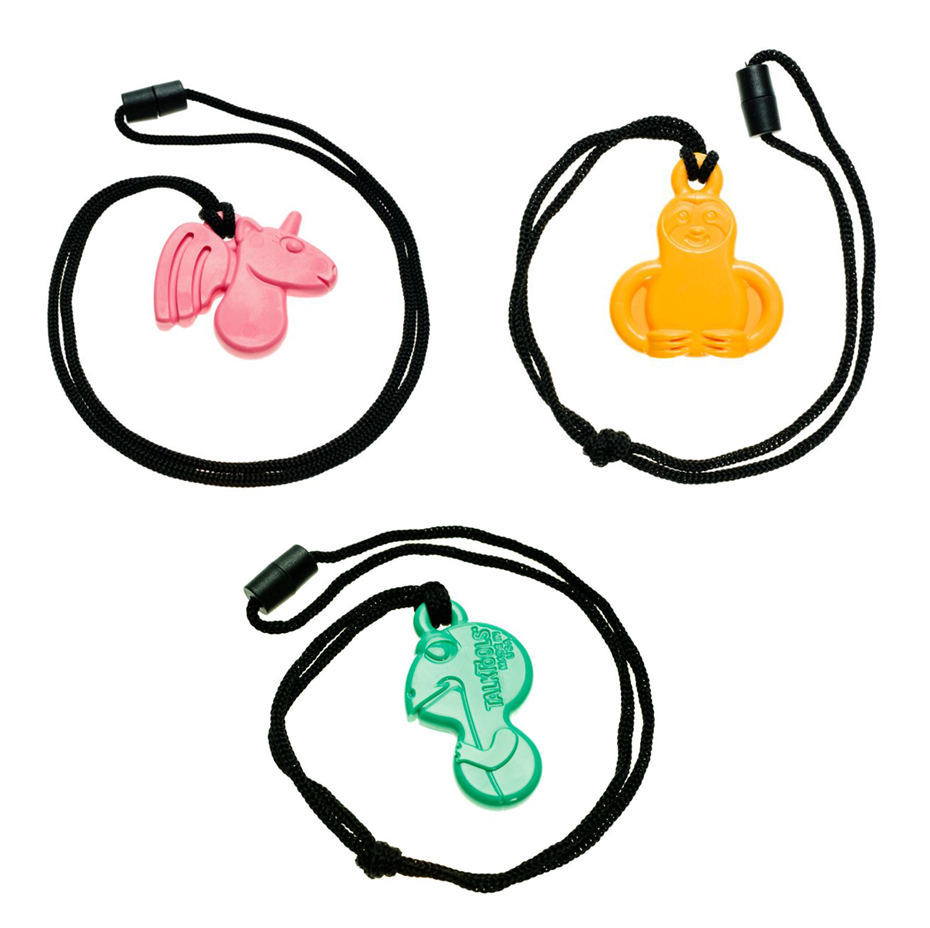
Troubleshooting: common problems (and easy fixes)
Even the right chew necklace can hit snags. Here are the most common issues and what to do.
“My child chews through everything”
If your child destroys chew toys for kids quickly, you’re likely dealing with a heavy chewer. Consider:
- A thicker option designed for heavy chewing
- Handheld autism chew toys instead of a necklace
- A plan for rotating chewies (so one can rest while another is used)
“They won’t wear a sensory necklace”
If a child refuses anything on the neck:
- Try handheld sensory chew toys
- Try a different style of chewelry for kids (bracelet, pencil topper)
- Use “chew breaks” rather than continuous wearing
“They chew other kids’ stuff at school”
This is common with oral sensory seeking. Provide:
- A backup chew necklace for kids
- A labeled pouch that stays in the desk
- Clear rules + reminders (visuals help)
Buying guide: where to start (and what to avoid)
If you want to start with the brand you searched, the most straightforward reference point for a chew necklace is the manufacturer listing.
- See Reference: TalkTools® Sensory Chew Necklaces (Amazon Product)
When shopping, avoid vague listings that don’t explain materials, cleaning, or safety features. For a chew necklace that will be used daily, transparency is part of safety.
Questions to ask before you buy chewelry for kids
Use these quick questions to choose between similar sensory chew necklaces:
- Is it clearly labeled for chewing (not decorative jewelry)?
- Are materials and safety claims specific (not just “safe”)?
- Does it include care instructions and guidance for checking wear?
- Is there an option that matches your child’s chew strength?
If you’re purchasing for school, also ask: “Will my child actually wear this sensory necklace in public?”
Special note: “teething necklace for mom” and baby-safe alternatives
The phrase “teething necklace for mom” often refers to a piece of adult-worn chewelry that a baby mouths while being held, letting the baby mouth the pendant. Even then, it should be used with direct supervision and removed when not in active use.
A child wearing a necklace (including any chew necklace for kids) unsupervised can be dangerous. Pediatric resources emphasize choking risks and the importance of keeping small objects and hazards away from young children. If you’re shopping for babies, consider safer, age-appropriate teethers instead of any necklace-style product.
Juguetes para niños con autismo: a quick bilingual note for families
If you’re searching in Spanish for “juguetes para niños con autismo”, you’ll often see chewable jewelry labeled as mordedores sensoriales or collares para morder. The same guidance applies: choose sensory chew necklaces made with transparent materials, use supervision, and match the chew tool to the child’s needs (autism, ADHD, anxiety, or teething).
Final checklist: is a TalkTools chew necklace right for you?
If you’re deciding whether to try a TalkTools chew necklace, here’s a quick checklist:
- ✅ Your child frequently chews clothing, pencils, or fingers
- ✅ You want a wearable chewy necklace for school or travel
- ✅ You can supervise and teach safety rules
- ✅ You’re open to pairing it with other adhd tools for kids or sensory supports
- ✅ You have a plan for cleaning and replacement
When those boxes are checked, a chew necklace can be one of the most practical, low-drama supports for daily life.