
If you’re building your baby essentials list, teething season can sneak up on you fast. One day your newborn is happily gumming a finger, and the next your little one is drooling, fussy, and trying to chew… everything. That’s where a ring teether becomes one of those “why didn’t I buy this earlier?” baby must haves.
A ring-style teether (often called a teething ring or baby teether ring) is simple by design: it’s easy for tiny hands to grip, offers soothing texture for tender gums, and can become a go-to comfort item in the diaper bag. Whether you’re shopping for infant toys 0-6 months, curating newborn girl essentials, or hunting for gifts for baby girl, the right ring teether can pull double duty as both a calming tool and a developmental toy.
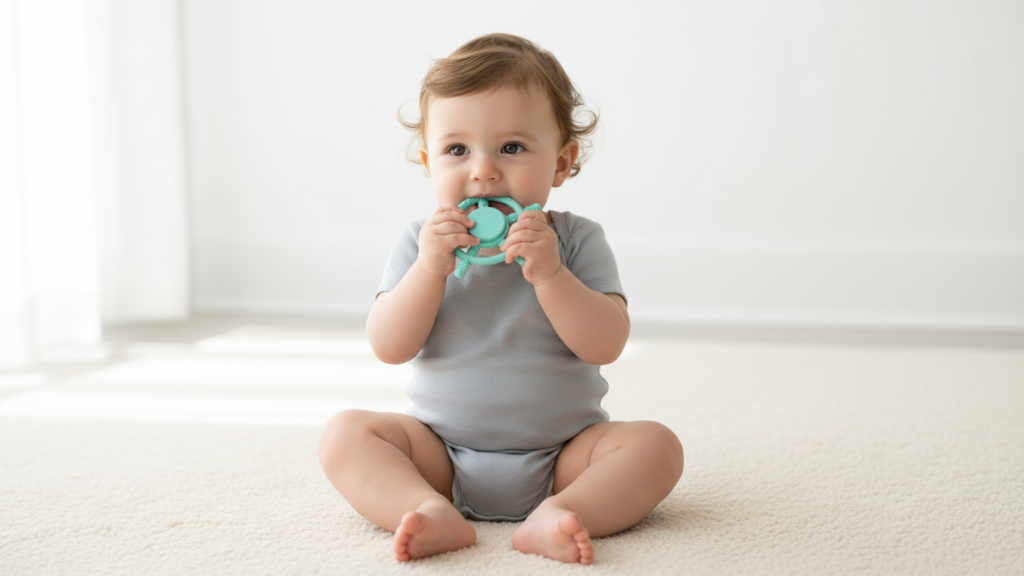
In this in-depth guide, we’ll cover:
- What makes a ring teether different from other baby teething toys
- How to choose the best materials (silicone, rubber, wood, and combo designs)
- Safety must-knows (because “cute” isn’t enough)
- How to use a ring teether by age—from newborn toys 0-3 months through teething toys 12-18 months
- Cleaning, storage, and travel tips
- Gift ideas and how to build a complete teething “toolkit”
You’ll also see natural keyword variety (LSI) around ring teethers—because parents search in lots of different ways: “teething rings for babies,” “silicone teethers for babies,” “baby teether toys,” and more.
Ring Teether Basics: What a Teething Ring Really Does
Ring Teether Meaning: Why the Shape Matters
A ring teether is exactly what it sounds like: a teether shaped like a ring (full circle or a partial loop). That shape is more important than it seems. Babies are still learning to coordinate grasping, transferring objects hand-to-hand, and bringing items to their mouth. A ring is easier to hold than many bulky baby teether toys, especially for younger babies who are just graduating into 3 month baby toys or baby toys 3 months.
Because the ring is designed for gripping:
- It supports early hand strength and coordination
- It’s easier for babies to “aim” toward sore gums
- It’s less likely to slip out of tiny hands than wide, flat toys
That’s why parents often consider a ring teether both a soothing tool and one of those surprisingly useful infant toy options for early months.
Ring Teether Relief: What Babies Feel During Teething
Teething can cause gum tenderness and pressure. Chewing provides counter-pressure, which many babies find calming. A ring teether offers:
- Gentle, chewable resistance
- Textured surfaces for sensory input
- A safe alternative to chewing on fingers, clothing, crib rails, or random household items
Important note: every baby is different. Some babies love a ring teether; others prefer a different shape (keys, mitts, or a teething toy with long handles). The goal is to find what your baby actually reaches for.
Why a Ring Teether Is a Baby Essential for Teething Season
Ring Teether + Baby Essentials: The “Always in the Bag” Item
Parents often plan for diapers, wipes, and extra onesies—classic baby necessities. But when teething hits, a ring teether becomes just as essential as a burp cloth. It’s small, lightweight, and easy to pack, making it a practical addition to your everyday baby items list.
If you’re a new parent building baby items must haves, consider storing:
- One ring teether at home
- One in the diaper bag
- One as a backup (because items fall on the floor constantly)
This is especially helpful when you’re out shopping, visiting family, or traveling with babies who suddenly decide the stroller strap looks delicious.
Ring Teether as a Toy: More Than “Just for Chewing”
Many parents search for baby teething toys, but a good ring teether can function like a multi-sensory toy. Depending on design, it may include:
- Ridges, nubs, and textures (sensory play)
- Soft-and-firm zones (exploration)
- Lightweight rattle features (attention and tracking)
So while it’s a baby teether, it also fits nicely into the world of infant toys 0-6 months and early 3-6 month baby toys that encourage grasping and mouth exploration.
Ring Teether for Baby Girl or Baby Boy: It’s Truly Universal
Teethers don’t need to be gendered, but many parents shopping for a baby girl (or planning a baby shower) like coordinating colors with baby girl accessories and nursery aesthetics. A ring teether is one of the easiest “neutral-but-cute” choices—perfect for a registry or for gifts for newborn baby girl.
You’ll also see people searching:
- baby essentials girl
- baby essentials boy
- baby girl stuff / pink baby stuff
- baby stuff for girls
No matter the style, prioritize safety and function first. Cute is a bonus.
Ring Teether Benefits for Infant Toys 0–6 Months
Ring Teether for 0–3 Months: Early Exploration (Not Always Heavy Chewing Yet)
For newborn toys 0-3 months and 0-3 month baby toys, babies often explore with their mouth even before intense teething begins. A soft, lightweight ring teether can be helpful for:
- Early gripping practice
- Safe mouthing exploration
- Comfort during fussy periods
At this age, you’ll want a very simple design: one-piece, soft silicone or soft rubber, easy to clean.
Ring Teether for 3–6 Months: The Sweet Spot for Teething Toys
Many parents search specifically for teething toys 3-6 months, teethers for babies 3-6 months, and baby toys 3-6 months because this is when:
- Drooling increases
- Babies grab everything
- Gum pressure can become more noticeable
A ring teether shines here because babies can hold it independently. If you’re shopping for 3 month old baby toys or toys for 3 month old girl, a ring teether often makes the “top 5” list of practical picks.
Ring Teether for 6 Months and Up: Still Useful (Especially on the Go)
Even as babies move into baby 6 month toys and toys for 6 month old, ring teethers remain helpful. Teething can come in waves, and having a familiar item on hand can reduce fussiness during errands or car rides.
At this stage, some babies like more advanced designs:
- Multiple textures
- Mixed materials (silicone + wood)
- Larger rings for a stronger grip
Choosing the Best Ring Teether: Materials, Texture, and Design
Silicone Ring Teether: The Most Popular Modern Choice
A silicone teether is often recommended because silicone is typically:
- Soft but durable
- Easy to wash
- Comfortable on gums
- Available in many shapes and textures
Parents often search for silicone teethers for babies, silicone baby toys, and teether toys for babies 0-6 months because silicone designs work across ages.
When shopping, look for:
- Food-grade silicone
- A one-piece design when possible
- No paint or peeling coatings
- A shape baby can easily grab
Rubber Teething Ring: Classic, Bouncy, and Chewy
Natural rubber teethers are also common. They can feel more “springy” than silicone. Some babies prefer the resistance.
If you choose rubber:
- Avoid strong chemical smells
- Follow care instructions (rubber can degrade if boiled or overheated)
- Inspect regularly for wear
Wooden + Silicone Ring Teether: A Popular Hybrid
Some teethers combine a wooden ring (for grip) with silicone chewing parts. These can be especially appealing for parents who like minimalist aesthetics or want variety in texture.
If you choose a hybrid ring teether:
- Ensure the wood is smooth, sealed appropriately, and splinter-free
- Confirm the silicone portion is securely attached (and designed that way, not DIY)
- Keep cleaning instructions in mind (wood is not always dishwasher-safe)
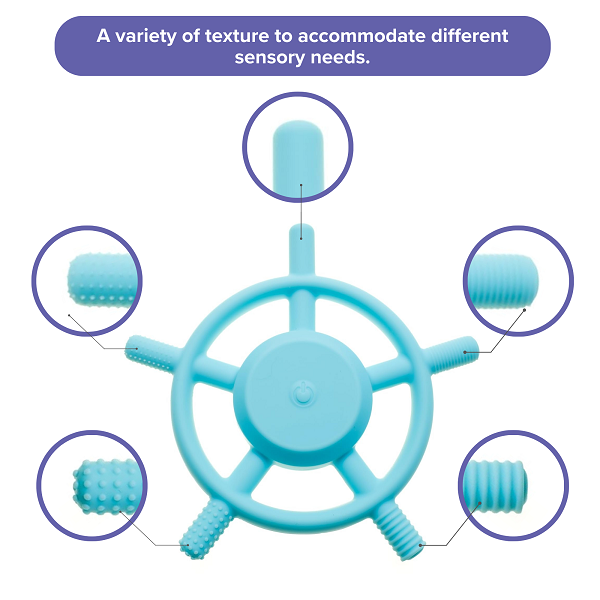
Texture: The Secret Sauce for a Ring Teether Babies Actually Use
Not all textures are created equal. Babies may prefer:
- Fine ridges for gentle soothing
- Larger bumps for heavier chewing
- Varied texture zones so they can “pick” what feels best
If you’ve ever bought baby teether toys that your baby ignores, texture might be why. A good ring teether gives options without being overly complicated.
Ring Teether Safety Checklist: What Parents Should Look For
Ring Teether Safety 101: Size, Shape, and Choking Risk
Safety comes first—always. A ring teether should be:
- Large enough that it can’t be swallowed
- Designed specifically for infants
- Free of detachable small parts
Avoid teethers with beads, loose attachments, or anything that can break off during chewing.
Materials and Certifications: What to Prioritize
You’ll see a lot of product claims online. While marketing varies, the practical parent checklist is:
- Clear material description (silicone, rubber, etc.)
- Reputable brand transparency
- Easy-to-follow care instructions
- No flaking paint or coatings
Cold Ring Teether Tips: Cooling Without Over-Freezing
Many parents like a chilled teething ring. Cooling can help soothe gums. A few common-sense tips:
- Chill in the fridge, not the deep freezer (extreme cold can be uncomfortable)
- Avoid anything that becomes rock-hard
- Always supervise use
If your baby is very young, start with short sessions and see how they respond.
Supervision and Wear Checks: The Habit That Matters Most
Even the best ring teether needs regular inspection. Add it to your routine:
- Check for tears, cracks, or weak points
- Wash after drops (especially in public)
- Replace if damaged
This is especially important once babies become strong chewers around 8–12 months.
Ring Teether by Age: A Practical Guide for 0–18+ Months
Ring Teether for Newborns: When Is It Appropriate?
Some parents include a ring teether in baby newborn essentials or new baby essentials even before teething begins. That can be fine if:
- The teether is lightweight
- The baby can safely mouth it with supervision
- It’s used more for exploration than aggressive chewing
If you’re shopping for new born toys or baby toys newborn, choose simple, soft designs.
Ring Teether for 3 Month Old Baby Toys and Early Teething
By about 3 months, babies often become more interested in grabbing. This is why 3month old baby toys and 3 month old toys lists frequently include:
- A ring teether
- A soft rattle
- High-contrast cards
- A safe sensory toy
A ring teether fits well because it’s easy to grasp, easy to bring to the mouth, and soothing when gums are sensitive.
Ring Teether for Teething Toys 3–6 Months: What to Look For
If you’re specifically shopping teethers for babies 3-6 months, prioritize:
- Easy grip and lightweight build
- Medium softness (not too hard, not too floppy)
- Multiple textures for different gum spots
- Simple cleaning
This is also a prime window for baby chew toys 0-6 months and baby teether options that support self-soothing.
Ring Teether for 6–12 Months: Stronger Chewers, More Mobility
Once babies can sit, scoot, or crawl, teethers become travel companions. For baby girl toys 6-12 months (or any baby), you may prefer:
- More durable silicone thickness
- Larger designs that won’t get lost
- Teeth-friendly texture that holds up
This overlaps with searches like toys for baby girls 6-12 months, baby girl toys 6 months, and even baby girl toys 6-12 months+.
Ring Teether for 12–18 Months: Teething Isn’t “Over” Yet
Many toddlers still benefit from a teether during molar phases. Parents may search teething toys 12-18 months or teethers for babies 12-18 months because late-stage teething can be intense.
For older babies/toddlers:
- Choose extra durable designs
- Avoid small or thin rings that could tear
- Consider bigger textures and tougher silicone
Cleaning a Ring Teether: Simple Care That Keeps It Safe
Ring Teether Cleaning Methods: Soap and Water, Dishwasher, and Sterilizing
Cleaning depends on the material, but for many silicone ring teethers:
- Warm water + mild soap works well
- Some are top-rack dishwasher-safe
- Some can be boiled (only if manufacturer says so)
For wood or mixed materials:
- Wipe with a damp cloth
- Avoid soaking
- Dry completely to prevent moisture issues
Ring Teether On-the-Go: Quick Cleaning for Real Life
Let’s be honest: teethers hit the floor. A travel-friendly approach:
- Keep a small wet bag to store dropped items
- Use baby-safe wipes for a quick clean (then wash properly later)
- Carry a backup teether in the diaper bag
This one habit can save your sanity when you’re out with a fussy baby.
Preventing Funky Smells and Residue
If your ring teether starts smelling weird:
- Wash thoroughly with mild soap
- Rinse well (soap residue can linger in texture grooves)
- Air dry fully
- Replace if odor persists or material seems degraded
Ring Teether vs. Other Baby Teether Toys
Ring Teether vs. Pacifiers: Different Jobs, Sometimes a Great Combo
Some parents rely on pacifiers, including popular searches like tommy tippee pacifiers (often spelled Tommee Tippee). Pacifiers can calm sucking needs, while a ring teether targets chewing pressure.
For some babies:
- Pacifier = soothing, sleep, comfort
- Ring teether = gum pressure relief, sensory chewing
Many families use both—especially during peak teething weeks.
Ring Teether vs. Teething Mittens
Teething mittens can be helpful when babies can’t hold objects well yet. But mittens can get gross fast (drool + fabric) and some babies hate wearing them. A ring teether is usually easier to clean and can grow with baby.
Ring Teether vs. Key-Style Teethers and Multi-Part Toys
Key-shaped teethers are common, but some are harder for younger babies to manage. A ring teether is often the simplest, most ergonomic start, especially for infant toys 0-3 months transitioning into 0-6 month baby toys.
Ring Teether vs. Specialty Shapes (Mushroom, Brush, etc.)
Some specialty teethers trend because they look fun and target specific areas. You might see searches like chompy mushroom silicone teether or brand-specific terms like frida baby teether or razbaby teether.
These can be great, but the ring teether remains the “classic” because:
- It’s straightforward
- It’s easy to grip
- It works for many babies across stages
A smart approach: start with one reliable ring teether, then add one specialty option if your baby needs variety.
Ring Teether Gift Ideas: From Newborn to 12+ Months
Ring Teether as a Baby Shower Gift: Small, Useful, Always Appreciated
If you’re shopping for infant gifts, gifts for babies, or gift for newborn, a ring teether is a practical win. It’s:
- Budget-friendly
- Lightweight to ship
- Useful even if the baby already has one (backup!)
It also pairs well with other baby items like bibs, burp cloths, or a cute toy.
Gifts for Baby Girl: Making It Cute Without Making It Complicated
For gifts for baby girl, consider sets that include:
- A ring teether + soft lovey
- A teether + crinkle book
- A teether + simple rattle
This works especially well for:
- newborn baby girl gifts
- baby girl gifts newborn
- gifts for newborn baby girl
If you want seasonal options, ring teethers also make adorable:
- stocking stuffers for baby girl
- stocking stuffer for baby girl
- newborn stocking stuffers 0-3 months
Gift Ideas by Age: What Actually Fits the Stage
Here are practical pairings that align with common shopping searches:
For newborns (0–3 months)
- Ring teether (soft, simple)
- High-contrast cards
- A soft rattle
Great for: newborn girl, newborn baby girl, newborn girl toys, toys for newborn baby girls
For 3–6 months
- Textured ring teether
- A small rattle ball (many parents search o balls baby / o balls baby toys)
- A soft sensory book
Great for: baby toys 3-6 months, 3-6 month toys, toy for baby 0-6 months, gifts for 3 month old girl, gift for 3 month old girl
For 6–12 months
- Durable ring teether
- Stacking cups
- Bath toys (many parents search baby bath toys 0-6 months and later bath toys too)
Great for: toys for 6 month old, 6 month old girl toys, 6 month baby girl toys, baby girls toys
Gifts for a 6 Month Old Girl and Beyond
If you’re shopping for gifts for 6 month old girl, keep it simple and useful:
- A ring teether + a small board book
- A teether + easy-grip spoon set
- A teether + a soft bath toy
For later milestones, you’ll also see searches like:
- gifts for 8 month old girl
- gift for 8 month old girl
- 6 month old girl gifts
A ring teether still belongs in the mix because teething doesn’t politely stop at one age.
Building a Teething Toolkit: Ring Teether + Baby Must Haves
Ring Teether and Baby Teething Toy Variety: Why One Option Isn’t Always Enough
Some babies pick a favorite and stick with it. Others want variety. A realistic teething kit might include:
- One ring teether (classic, easy grip)
- One longer teething toy (for reaching back gums)
- One cooling option (if your baby likes chilled soothing)
- One “distraction” toy (rattle or soft toy)
This supports the broader idea of building baby must haves that actually get used—rather than a pile of cute stuff.
Pairing Ring Teether With Everyday Baby Necessities
If you’re organizing baby necessities for home and travel, consider adding:
- Bibs for drool
- Burp cloths
- A pacifier clip (for pacifiers, not teethers unless designed for it)
- A small wet/dry bag
For parents looking for baby essentials deals or baby clearance deals, teethers are often a smart item to grab when discounted—just avoid random off-brand options with unclear materials.
Teething + Play: Choosing Toys That Grow With Baby
If you’re choosing baby teething items while also shopping for toys, aim for overlap:
- A ring teether can be part of baby toys 3 months+
- Many are also great for 4 month old baby toys and 4month old baby toys
- Some become favorites alongside 5 month old baby toys and toys for 5 month old
In other words: a ring teether is one of the few items that can sit comfortably in both “soothing” and “play” categories.
Ring Teether Shopping Tips: How to Find the Right One (Without Overbuying)
Start With One Excellent Ring Teether, Then Adjust
It’s tempting to buy ten options. A smarter approach:
- Start with one high-quality ring teether
- Watch what your baby does (chew hard? prefer soft? like cold?)
- Add a second option only if needed
This reduces clutter and helps you learn what your baby truly likes.
Lightweight Matters for Younger Babies
For infant toys 0-6 months, weight can make or break usability. If the teether is too heavy, babies drop it and get frustrated. Look for “easy grip” and “lightweight” designs.
Consider Size for Small Hands
If you’re looking for small baby toys, make sure the ring is:
- Easy to grasp
- Not so tiny that it’s unsafe
- Not so large that baby can’t manage it
A good ring teether hits that “Goldilocks” zone: easy to hold, safe to chew, and not awkward.
Budget-Friendly Options: Cheap Baby Toys That Are Still Safe
Yes, you can find cheap baby toys and still prioritize safety. The key is to buy from reputable sellers with clear material info and safety guidance. Price matters, but transparency matters more.
Ring Teether FAQs: Real Parent Questions Answered
What’s the best ring teether for babies 3–6 months?
For teethers for babies 3-6 months, the best ring teether is usually:
- Soft silicone or natural rubber
- Lightweight
- Textured (but not overly complex)
- Easy to clean
Babies in this stage are learning grip and often want something they can control.
Can a ring teether be part of infant toys 0–3 months?
Yes—especially as a supervised mouthing toy. For infant toys 0-3 months and best toys for 0-3 months baby, a ring teether can be helpful if it’s very lightweight and simple.
How many teethers does a baby need?
There’s no perfect number, but many families do well with:
- 2–3 total (one at home, one for travel, one backup)
If you have a baby girl essentials must haves checklist or a registry, that’s a practical target.
Are “teething rings” and “ring teethers” the same thing?
In most shopping contexts, yes. “Teething ring” is a common synonym. You’ll see searches like teething rings, teething ring, and teething rings for babies. Product names vary, but the ring-shaped concept is the same.
What if my baby won’t use a ring teether?
That happens. Try:
- Offering it when baby is calm (not already melting down)
- Chilling it briefly (if safe for the product)
- Rotating textures (another ring teether design)
- Testing a different shape (mushroom, handle teether, or a soft brush-style teether)
Are there ring teethers that work as bath toys?
Some silicone teethers can be used around bath time, but always check the product design. Avoid teethers that trap water internally. If you’re shopping for bath toys for babies 0-6 months, prioritize items specifically designed for water play.
Any tips for multilingual searches?
If you’re shopping in Spanish, you may see:
- mordedera para bebe
- mordedores para bebes
- cosas para bebes
- juguetes para bebes 0 a 6 meses
The same safety and material rules apply—just with different search terms.
Conclusion: Choosing the Right Ring Teether for Your Baby
A ring teether is one of the simplest, most effective tools you can add to your baby’s routine—whether you’re preparing for teething, stocking up on baby essentials, or picking thoughtful gifts for baby girls 0-6 months and beyond. The best ring teether isn’t necessarily the fanciest or the trendiest; it’s the one your baby can grip easily, chew safely, and enjoy consistently.
As you shop, remember:
- Prioritize safety, materials, and easy cleaning
- Choose textures your baby will actually want to chew
- Keep one in the diaper bag because teething doesn’t wait
With a solid ring teether (and a few complementary baby teething toys), you’ll be ready for the drool, the chomping, and those surprisingly sweet moments when your baby finds comfort in something you thoughtfully chose.